
What is epidemiology?
Epidemiology is the study of the distribution and determinants of diseases or disorders within groups of people, and the development of knowledge on how to prevent and control them.
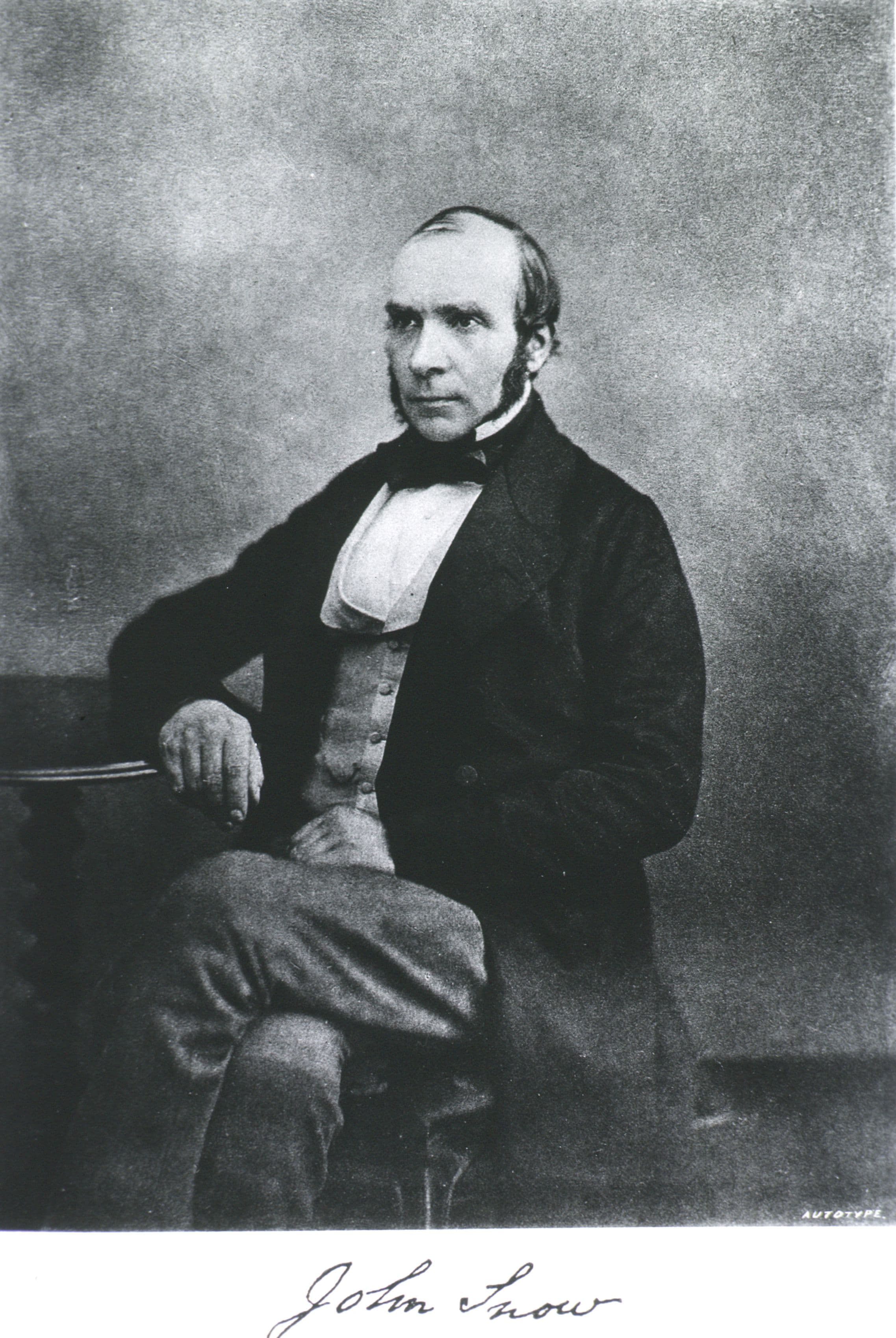
Courtesy of the National Library of Medicine
In the mid-1800's, London was experiencing a cholera pandemic. The common theory about the pandemic was that cholera was spread in the air, and bad odor was involved in disease transmission (miasma theory). John Snow, the queen's anesthesiologist, interviewed residents in a neighborhood of London experiencing a high incidence of cholera. He mapped out cases, identifying where they obtained their water—and correctly identified a specific water pump as the culprit for the outbreak! He is now referred to as the father of epidemiology.
These same principals of case investigation and mapping used by John Snow in 1800's London are still used in modern epidemiology!
What do local epidemiologists do?
City, town, and regional epidemiologists can provide:
Surveillance & investigation
- Disease surveillance & monitoring (i.e. MAVEN coverage, case investigations, contact tracing, etc.)
- Expertise on disease transmission & prevention
Data & reporting
- Data analysis & reporting
- Data visualization
- Regional immunization reporting
Community & communication
- Health communication & promotion
- Community health surveys & engagement
- Community Health Needs Assessments (CHNAs) & Community Health Improvement Plans (CHIPs)
Partnerships & capacity
- Grant writing & research support
- Program evaluation
- Collaborative partnerships